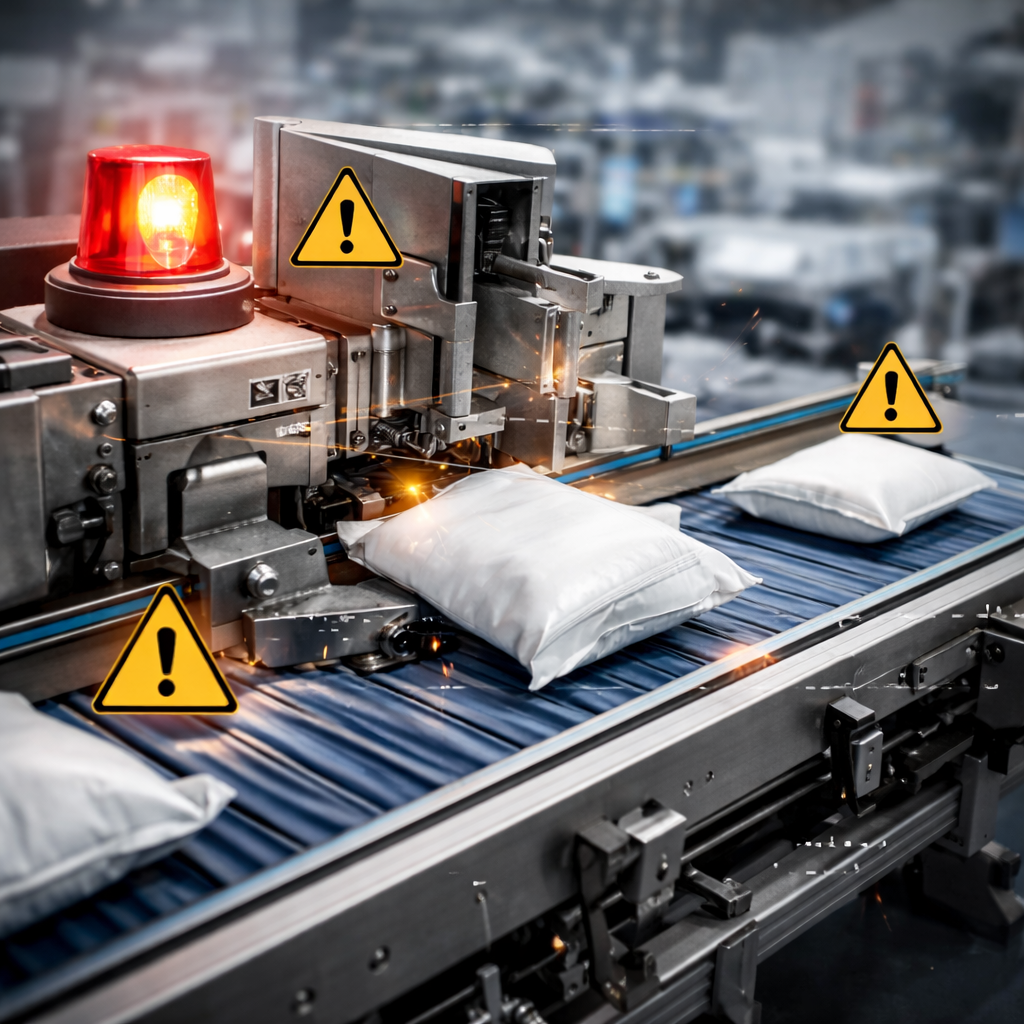
In high-speed packaging environments, not all production losses come from major breakdowns. Some of the most damaging inefficiencies are small, frequent interruptions known as micro stoppages. These are short pauses that may last only a few seconds, but when they occur repeatedly, they significantly reduce overall productivity.
Many manufacturers overlook micro stoppages because they are not always recorded as downtime. However, over time, they can lead to reduced output, increased wear on machines, and higher operational costs. Understanding what causes these interruptions is the first step toward building a more efficient packaging line.
What Are Micro Stoppages
Micro stoppages are brief interruptions in a packaging line that do not require major repairs or extended downtime. They often occur due to minor issues such as product misalignment, sensor errors, or temporary jams.
Although each stoppage may seem insignificant, their cumulative impact can be substantial. In high-volume production lines, even a few seconds lost repeatedly can reduce daily output by a large margin.
Common Causes of Micro Stoppages
-
Inconsistent Product Feeding
One of the most common causes of micro stoppages is irregular product flow. If products are not fed consistently into the machine, it can lead to misalignment or gaps in the process.
This often happens in semi-automated systems or when feeding depends heavily on manual handling.
Impact:
Machines pause briefly to adjust or wait for proper product positioning.
-
Sensor Misalignment or Sensitivity Issues
Packaging machines rely on sensors to detect product position, count, and movement. If sensors are not calibrated correctly or become misaligned, they may trigger false signals.
Impact:
Machines stop unnecessarily, even when there is no actual issue.
-
Material Quality Variations
Packaging materials such as films, pouches, or cartons may vary in thickness, size, or quality. Poor quality materials can cause jams, improper sealing, or feeding issues.
Impact:
Machines pause frequently to correct or reject faulty materials.
-
Improper Machine Settings
Incorrect machine parameters such as speed, temperature, or pressure can lead to inconsistent performance. Operators may need to make frequent adjustments, causing short interruptions.
Impact:
Repeated minor stoppages due to instability in machine operation.
-
Lack of Synchronization Between Machines
In integrated packaging lines, all machines must operate at synchronized speeds. If one machine runs faster or slower than others, it creates imbalances.
Impact:
Temporary stoppages as machines wait for upstream or downstream processes to catch up.
-
Product Variations and SKU Changes
Frequent SKU changes introduce variations in size, weight, and packaging requirements. Without proper setup and calibration, machines may struggle to handle these changes smoothly.
Impact:
Short pauses during transitions and adjustments.
-
Wear and Tear of Components
Over time, machine components such as belts, rollers, and seals wear out. Even minor wear can affect performance and cause intermittent stoppages.
Impact:
Machines pause due to inconsistent mechanical performance.
Manual interventions, even for small adjustments, can interrupt the flow of the packaging line. These may include clearing minor jams, adjusting materials, or correcting alignment.
Impact:
Frequent small pauses that reduce overall efficiency.
Hidden Impact of Micro Stoppages
Micro stoppages may not appear significant individually, but their cumulative effect can be substantial.
- Reduced overall equipment efficiency
- Lower production output
- Increased machine wear due to frequent starts and stops
- Higher energy consumption
- Increased operator workload
In many cases, micro stoppages can reduce effective production capacity without being clearly visible in reports.
How to Reduce Micro Stoppages
-
Improve Product Feeding Systems
Automated feeding systems ensure consistent product flow and reduce dependency on manual handling.
-
Calibrate and Maintain Sensors
Regular sensor checks and calibration prevent false signals and unnecessary stoppages.
-
Use High Quality Packaging Materials
Consistent material quality reduces jams and improves machine performance.
-
Optimize Machine Settings
Standardizing machine parameters for each SKU improves stability and reduces adjustments.
-
Balance the Packaging Line
Ensure all machines operate at synchronized speeds to maintain smooth flow.
-
Implement Preventive Maintenance
Regular maintenance keeps machine components in good condition and prevents performance issues.
-
Train Operators Effectively
Well-trained operators can identify and resolve minor issues quickly without disrupting production.
-
Adopt Smart Monitoring Systems
Modern packaging solutions include real time monitoring tools that track micro stoppages and identify patterns. This helps manufacturers take corrective actions based on data.
Role of Smart Packaging Solutions
Advanced packaging systems are designed to minimize interruptions. Smart packaging solutions use sensors, automation, and data analytics to detect inefficiencies and optimize performance.
These systems provide insights into machine behavior, helping manufacturers identify the root cause of micro stoppages and improve line efficiency over time.
Final Thoughts
Frequent micro stoppages are often overlooked but can have a major impact on packaging line performance. By identifying the root causes and implementing the right solutions, manufacturers can significantly improve productivity and reduce hidden losses.
In a competitive manufacturing environment, even small improvements in efficiency can lead to substantial gains. Addressing micro stoppages is a practical and effective step toward building a more reliable and high-performing packaging operation.