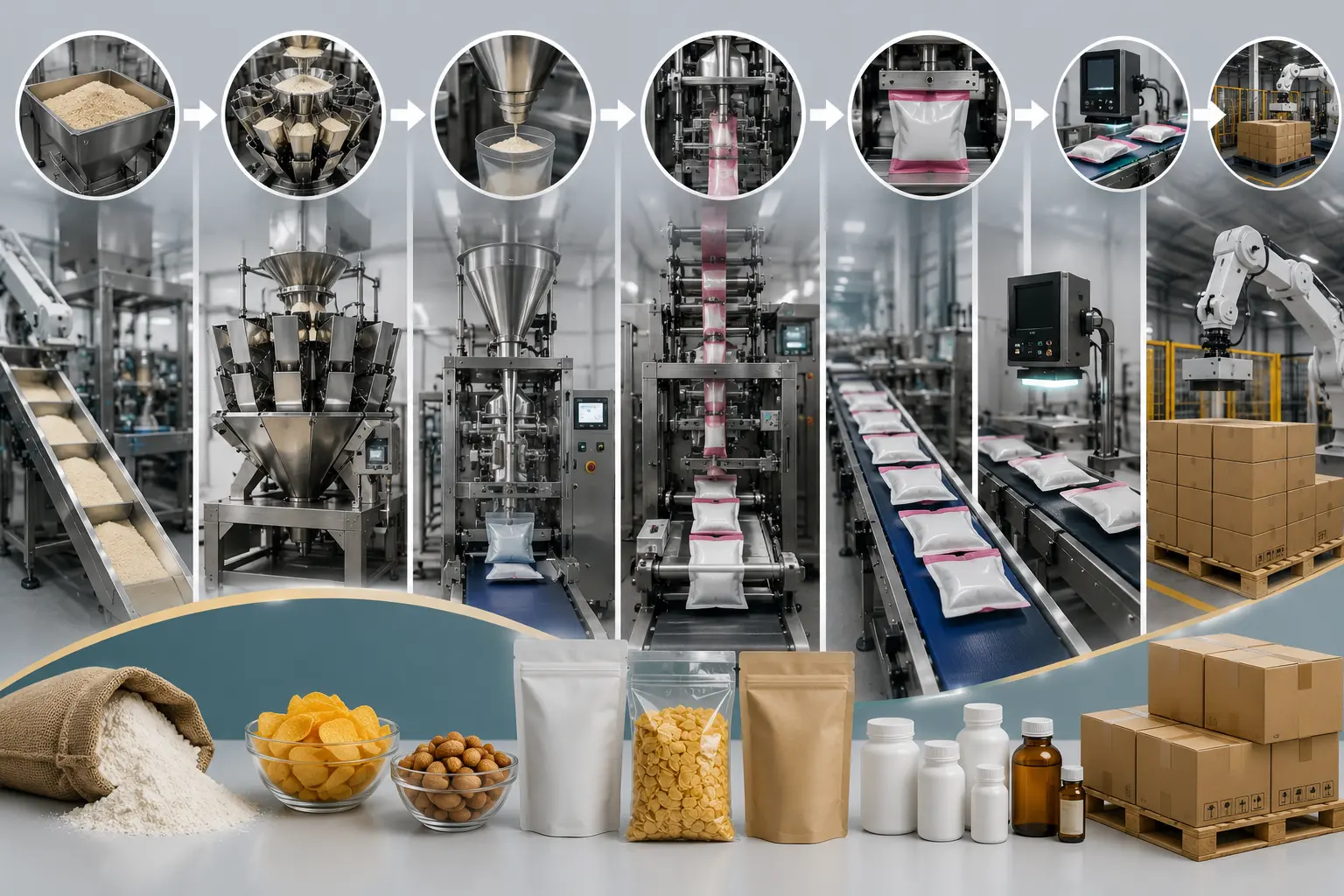
Behind every packaged product on a store shelf is a carefully planned packaging journey. From the moment raw materials enter a manufacturing facility to the final packed goods ready for dispatch, multiple stages work together to ensure quality, safety, consistency, and efficiency.
Modern packaging operations are no longer limited to simply filling and sealing products. Today’s manufacturing plants rely on integrated systems, automation, and smart packaging technologies to streamline every stage of production. Understanding this complete journey helps businesses improve operational efficiency and build more reliable packaging processes.
Step 1: Raw Material Handling and Preparation
The packaging journey begins with raw material handling. Depending on the industry, this may involve powders, liquids, granules, food products, chemicals, or pharmaceutical ingredients.
Before packaging starts, raw products are stored under controlled conditions, measured and prepared for processing, moved through conveyors or feeding systems and checked for quality and consistency.
Proper handling at this stage is critical because inconsistent raw material flow can create bottlenecks later in the packaging line.
Automated feeding systems are commonly used to maintain steady product movement and reduce manual intervention.
Step 2: Product Processing and Filling
Once the product is prepared, it moves to the filling stage. Filling machines accurately dispense products into pouches, bottles, cartons, trays, or containers.
The type of filling system depends on the product being handled.
Common Filling Systems Include:
- Powder filling machines
- Liquid filling systems
- Auger fillers
- Volumetric fillers
- Multihead weighers
Accuracy is extremely important during this stage. Overfilling increases material costs, while underfilling affects product quality and customer trust.
Modern packaging lines use automated filling systems with sensors and controls to ensure precision and consistency.
Step 3: Package Forming
In flexible packaging operations, the packaging material itself is formed into pouches or bags during the production process.
Machines such as vertical form fill seal and horizontal form fill seal systems create packaging directly from roll film. These systems shape the material into the required format before the product is inserted.
This stage allows manufacturers to produce different pouch styles, including:
- Pillow packs
- Stand up pouches
- Gusseted bags
- Sachets
Automated package forming improves speed and reduces packaging material waste.
Step 4: Sealing and Product Protection
After filling, packages move to the sealing stage. Proper sealing protects products from contamination, moisture, leakage, and external damage.
Sealing methods vary depending on the product and packaging material.
Common Sealing Methods:
- Heat sealing
- Vacuum sealing
- Induction sealing
- Ultrasonic sealing
High quality sealing is especially important in food, pharmaceutical, and chemical packaging where product integrity directly affects safety and shelf life.
Smart sealing systems monitor temperature and pressure to maintain consistent seal quality.
Step 5: Inspection and Quality Control
Before products move further down the line, automated inspection systems verify packaging accuracy and quality.
Inspection systems check for seal integrity, correct product weight, proper labeling, barcode accuracy and damaged or defective packaging.
Vision inspection systems and sensors identify errors in real time, preventing faulty products from reaching customers.
This stage plays a major role in maintaining brand reputation and regulatory compliance.
Step 6: Cartoning and Secondary Packaging
Once primary packaging is complete, products move to secondary packaging systems such as cartonators and case packers.
Cartoning machines group products into cartons or boxes for easier handling, branding, and transportation.
Secondary packaging helps:
- Protect products during shipping
- Improve retail presentation
- Organize products for distribution
Automated cartoning systems improve consistency and reduce manual handling.
Step 7: End of Line Packaging
The final stage of the journey is end of line packaging. This includes:
- Case packing
- Palletizing
- Stretch wrapping
- Labeling for shipment
Robotic palletizers arrange cartons onto pallets in stable patterns, ensuring safe transportation and storage.
Stretch wrapping systems secure pallet loads and protect products during transit.
Integrated end of line automation ensures smooth product flow from packaging to dispatch.
Step 8: Storage and Dispatch
After packaging is complete, finished goods move to storage or shipping areas. Proper warehouse management ensures products are organized, traceable, and ready for distribution.
Modern facilities often integrate packaging lines with warehouse systems to improve inventory tracking and logistics planning.
Digital systems help manufacturers monitor:
- Production output
- Inventory levels
- Shipment schedules
- Batch traceability
This creates better coordination between manufacturing and supply chain operations.
Role of Automation Throughout the Journey
Automation plays a critical role across every stage of the packaging process. From product feeding to palletizing, automated systems improve speed, accuracy, and operational stability.
Benefits of automation include: