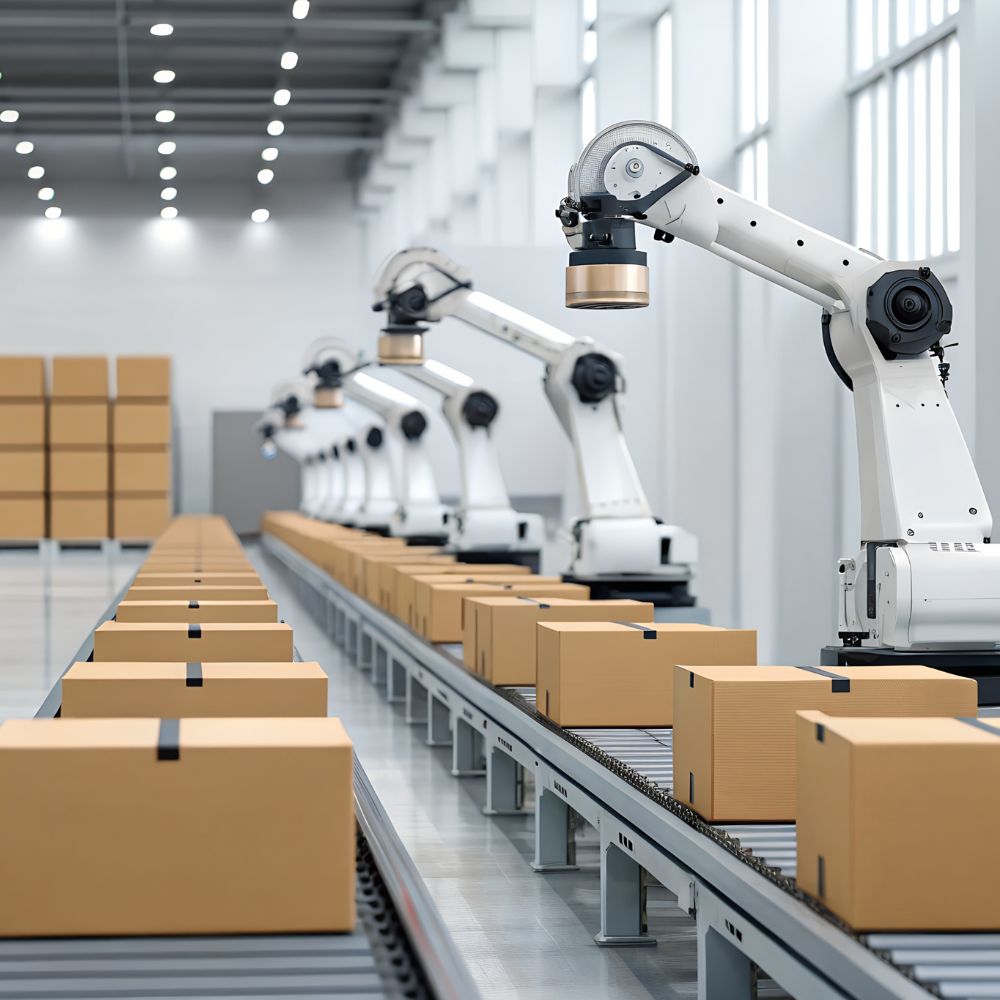
Robotics is no longer a future concept in packaging. It is already reshaping how Indian manufacturing plants operate, compete, and scale. From food and FMCG to pharmaceuticals and chemicals, robots are becoming an essential part of modern packaging lines. As demand for speed, consistency, and safety increases, robotics is helping manufacturers meet market expectations while reducing operational stress.
Indian manufacturing is at a turning point. Rising labor costs, increasing quality standards, and pressure to deliver faster are pushing companies to rethink traditional packaging methods. Robotics offers a practical and long term solution.
Why Robotics Is Gaining Momentum in Packaging
Packaging operations involve repetitive, high speed, and accuracy driven tasks. These tasks are ideal for robotic automation. Robots can work continuously without fatigue, maintain consistent performance, and operate in challenging environments.
In India, manufacturers face additional challenges such as labor availability, skill gaps, and seasonal workforce fluctuations. Robotics helps overcome these issues by creating stable and predictable packaging operations.
Key Areas Where Robotics Is Used in Packaging
Pick and Place Operations
Robotic arms are widely used for picking products from conveyors and placing them into cartons, trays, or pouches. These systems handle products of different shapes and sizes with high precision.
This is especially useful in food, pharma, and FMCG industries where speed and gentle handling are critical. Robots reduce product damage and maintain uniform placement.
Case Packing and Cartoning
Robotic case packers load products into cartons accurately and quickly. Unlike manual packing, robots ensure correct orientation, count, and placement every time.
This improves packaging consistency and reduces rework caused by human error. For manufacturers dealing with multiple SKUs, robots offer flexibility through quick changeovers.
Palletizing and Depalletizing
Robotic palletizers are one of the fastest growing applications in Indian factories. They stack cartons, bags, or cases in precise patterns, ensuring load stability for transport.
Manual palletizing is labor intensive and risky. Robotics improves safety by eliminating heavy lifting and repetitive strain injuries. It also increases throughput at the end of the packaging line.
End of Line Packaging Automation
Robots are increasingly integrated with end of line systems such as stretch wrapping and conveyor management. This creates a smooth flow from packing to dispatch.
By balancing upstream and downstream operations, robotics helps eliminate bottlenecks and improves overall line efficiency.
Benefits of Robotics for Indian Manufacturers
Higher Productivity and Speed
Robots operate at consistent speeds and can run for long hours without breaks. This helps manufacturers meet high demand and tight delivery schedules.
For growing businesses, robotics enables scaling without proportional increases in manpower.
Improved Quality and Consistency
Consistency is critical in packaging. Robots perform tasks the same way every time, reducing variation in sealing, stacking, and packing.
This is particularly important for pharmaceutical and export oriented manufacturers that must meet strict quality standards.
Reduced Labor Dependency
Labor shortages and turnover are common challenges in Indian manufacturing. Robotics reduces dependency on manual labor for repetitive tasks and allows workers to focus on supervision and quality control.
This improves workforce utilization and reduces operational uncertainty.
Enhanced Safety
Packaging operations often involve sharp edges, heavy loads, and fast moving equipment. Robotics removes humans from high risk zones, improving workplace safety.
Safer operations also reduce downtime caused by accidents and injuries.
Long Term Cost Efficiency
While robotic systems require initial investment, they offer strong returns over time. Reduced labor costs, lower rejection rates, and minimal downtime contribute to long term savings.
Robots also have predictable maintenance schedules, which helps in planning and cost control.
Robotics and Flexibility in Packaging
One of the biggest advantages of robotics is flexibility. Modern robotic systems can be programmed to handle multiple product types and packaging formats.
This is valuable for Indian manufacturers that serve diverse markets and frequently launch new products. Instead of investing in multiple dedicated machines, robots can adapt with minimal adjustments.
Role of Smart Technology and Data
Robotic systems are now integrated with sensors, vision systems, and software platforms. These technologies provide real time data on performance, errors, and efficiency.
Manufacturers can use this data to optimize operations, reduce waste, and plan preventive maintenance. Data driven packaging lines are becoming a key competitive advantage.
Challenges in Adopting Robotics
Despite the benefits, some manufacturers hesitate to adopt robotics due to cost concerns and lack of technical expertise. However, many solution providers now offer modular robotic systems that allow gradual automation.
Training and support are also improving. With proper planning and partner selection, even mid sized manufacturers can successfully implement robotic packaging systems.
What the Future Looks Like
Robotics will continue to play a central role in the evolution of Indian manufacturing. As technology becomes more affordable and accessible, adoption will increase across sectors.
Future packaging lines will combine robotics, automation, and smart monitoring to deliver high performance with minimal waste and energy use. Manufacturers that invest early will be better positioned to compete both domestically and globally.
Final Thoughts
Robotics is transforming packaging from a labor driven function into a smart, efficient, and scalable operation. For Indian manufacturing, this shift is not just about automation. It is about building resilience, improving quality, and preparing for future growth.
As market demands rise and competition intensifies, robotics will become a key enabler for manufacturers aiming to stay ahead. If you want, I can also tailor this blog for a specific industry like food, pharma, FMCG, or chemicals, or convert it into a case study or newsletter format.