The short answer: machines that arrive with their compliance paperwork and can handle traceability codes.
Since January 2026, revised Schedule M (India’s good manufacturing practice standard for drug makers) has applied to pharma manufacturers across the board, after the last extension for smaller units ended in December 2025. It expects documented qualification of equipment, meaning proof that a machine was designed, installed, and performs as specified (DQ, IQ, OQ, PQ). It also expects tight control over computerised systems: restricted access, data backup, and a second check on critical data entered by hand. Qualification adds time and cost up front, but it is far easier to get from a supplier at purchase than to chase after installation.
Traceability is the other driver. QR or bar codes have been mandatory on India’s top 300 drug brands since 2023. In June 2026, the government extended the rule to vaccines, anti-cancer drugs, and narcotic and psychotropic drugs (deadline 1 July 2027), then antimicrobials (1 July 2028).
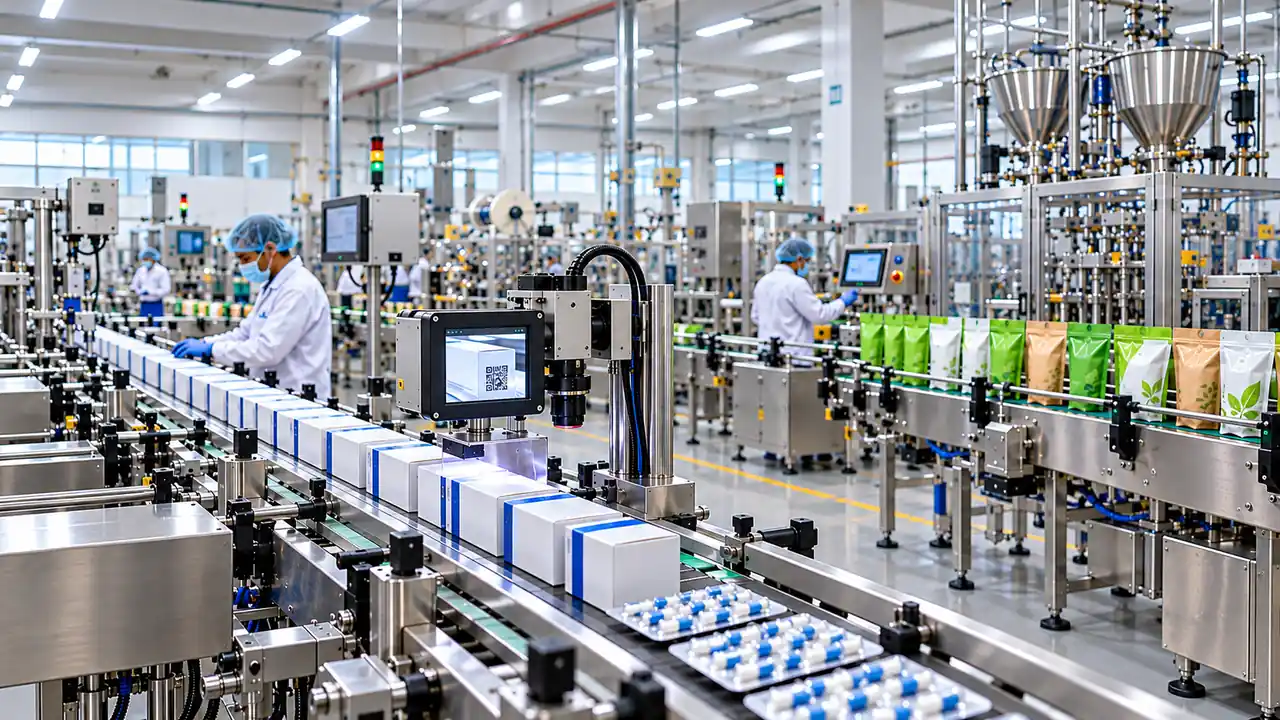
The code goes on the primary pack, the one touching the product, or on the secondary pack (the carton) if space is short. That detail matters: coding and verification often have to be planned at the filling and sealing stage, not just at the end of the line.
Pharma teams evaluating pharmaceutical packaging solutions are now asking for:
- Qualification documents from the supplier, not as an afterthought
- Machine controls with user access levels, audit trails, and data backup
- Integration points for coding and vision verification
- Documented, repeatable changeovers between batches and formats