Home / Blog / Cartoning vs Case Packing: What’s the Difference?

Cartoning vs Case Packing: What’s the Difference?

Explore Molbio Diagnostics’ growth journey and why scalable packaging infrastructure and automation can support growing diagnostic manufacturing requirements.
cartoning-versus-case-packing

If you’re setting up or upgrading a packaging line, these two terms come up constantly and are often confused. Cartoning and case packing sit right next to each other on the production floor, which is probably why people use them interchangeably. They shouldn’t be. Each serves a distinct purpose, and knowing where one ends and the other begins can save you from ordering the wrong equipment or misjudging your line’s throughput.

Here’s the short version: cartoning packs individual products into their retail-ready cartons. Case packing takes those finished cartons (or other packed units) and groups them into shipping cases for transport. One is about presentation and product protection at the unit level. The other is about logistics, getting volume out the door safely.

Let’s break down what that actually means on the shop floor.

What Cartoning Actually Does?

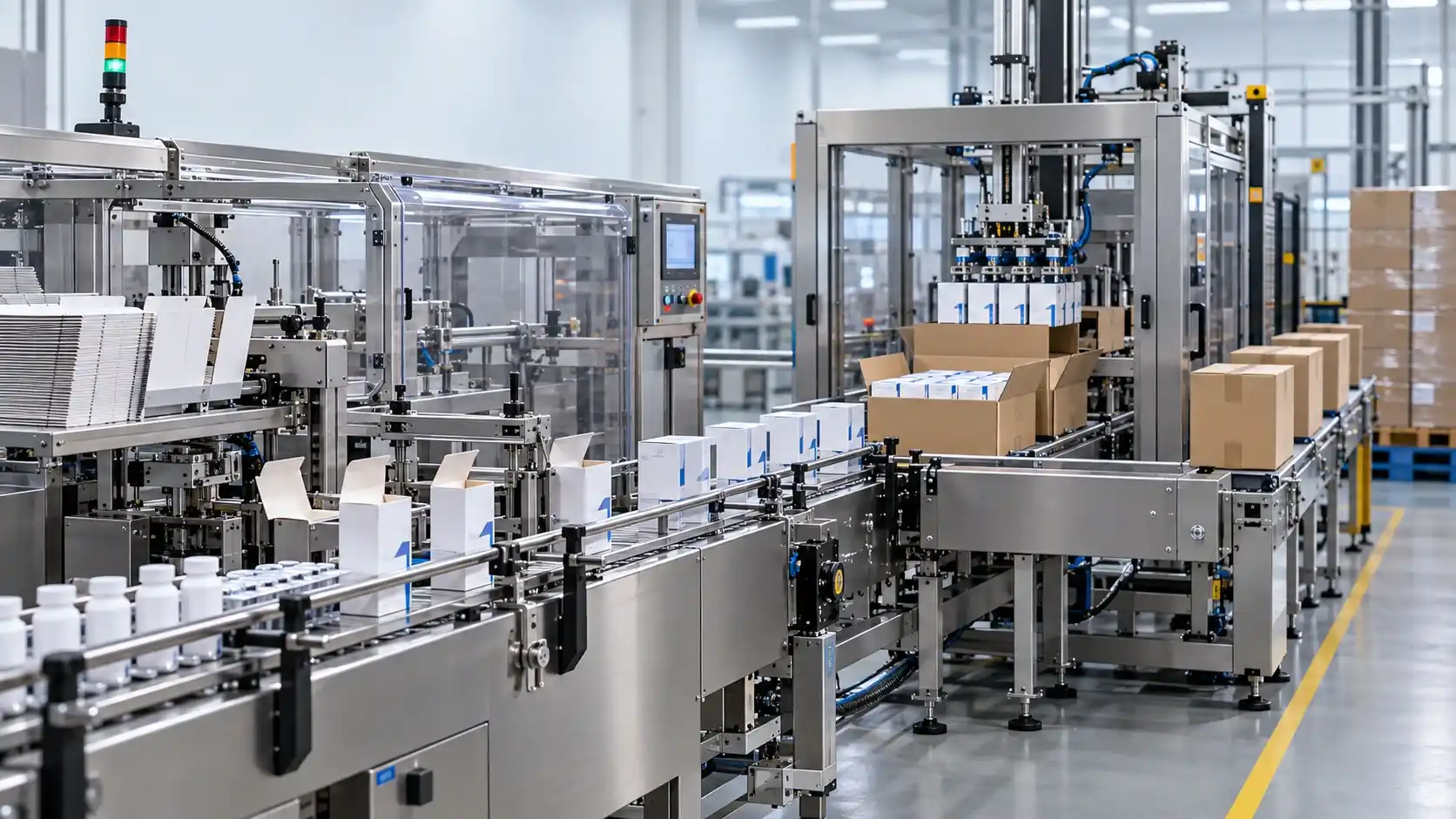
What Cartoning Actually DoesCartoning is the step where a product gets its “face”: the box a customer or pharmacist actually picks up. A cartoning machine (often just called a cartonator) takes flat carton blanks, erects them into a box shape, loads the product, tucks in any inserts like leaflets or manuals, and seals the carton shut.

This stage matters more than it looks. In pharma and cosmetics especially, the carton often carries batch codes, regulatory text, and tamper-evidence features. A cartoning machine handles all of that with precision, at speed, without damaging fragile products like blister strips, tubes, or glass bottles.

A few things a good cartoning line typically handles:

  • Erecting cartons from flat blanks without jams or misfolds
  • Loading products along with inserts, leaflets, or accessories
  • Sealing cartons securely with glue, tuck, or tamper-evident closures
  • Printing or verifying batch codes and expiry dates in real time

What Case Packing Actually Does?

What Case Packing Actually DoesCase packing picks up where cartoning leaves off. Once you have a batch of sealed cartons (or bottles, pouches, or other packed units), it needs to be grouped and loaded into larger shipping cases, the corrugated boxes that actually travel on a truck or sit on a warehouse pallet.

A case packer isn’t worried about how the product looks. It’s worried about how many units fit per case, how tightly they’re packed, and whether the case survives a few thousand kilometres of transit without crushing what’s inside. This is purely a logistics and distribution function, though it still needs to be gentle enough not to damage the cartons it’s handling.

Typical case packing tasks include:

  • Grouping a set number of cartons or units per case
  • Erecting and closing outer shipping cases
  • Applying case-level labelling for shipment tracking
  • Preparing cases for palletizing and dispatch

The Easiest Way to Remember the Difference

Here’s a mental shortcut we give clients who are new to packaging automation: cartoning is what the end customer sees. Case packing is what the delivery truck sees.

If a step affects how the product looks on a shelf or in a pharmacist’s hand, it’s cartoning. If a step is about stacking, shipping, and surviving a warehouse, it’s case packing. Once that distinction clicks, choosing the right machine for each stage gets less confusing.

Why This Distinction Matters for Your Production Line

Getting this wrong isn’t just a vocabulary problem; it affects planning. Manufacturers sometimes budget for “end-of-line automation” as one lump item, without realizing cartoning and case packing often need separate machines with different speeds, footprints, and change-part requirements. A line that’s cartoning at 200 units a minute will bottleneck badly if the downstream case packer can’t keep pace.

The two also tend to have different upgrade timelines. A business might automate cartoning first, since regulatory and branding requirements are strictest there, and only automate case packing later, once volumes justify it. Planning both stages together from the start avoids retrofitting a line twice.

There’s also a cost and space conversation that gets skipped when the two are lumped together. Cartoning machines are usually compact and sit close to the primary filling line, while case packers and their downstream palletizers need more floor space for case erection, stacking, and staging before dispatch. If a plant is tight on layout, that’s a conversation worth having early, not after equipment has already been ordered.

Where Pactech Solutions Fits In

At Pactech Solutions, our cartonator systems are built specifically for that first job – erecting, loading, and sealing cartons with consistency across pharma, FMCG, cosmetics, and food production lines. As an experienced cartoning machine manufacturer, we design our systems to integrate cleanly with downstream case packers, palletizers, and conveyors; thus, the transition from individual carton to shipping case happens without bottlenecks.

If you’re mapping out your end-of-line packaging automation and aren’t sure where cartoning should end and case packing should begin, our team can walk through your product line and current setup. Get in touch with Pactech Solutions to talk through what a properly sequenced, automated packaging line looks like for your production volumes.

Enquiry Form