Home / Blog / End-of-Line Packaging Automation: How It Improves Production Efficiency

End-of-Line Packaging Automation: How It Improves Production Efficiency

Discover the benefits of end-of-line packaging automation and how automated systems can improve packaging efficiency, reduce manual handling, and streamline production operations.
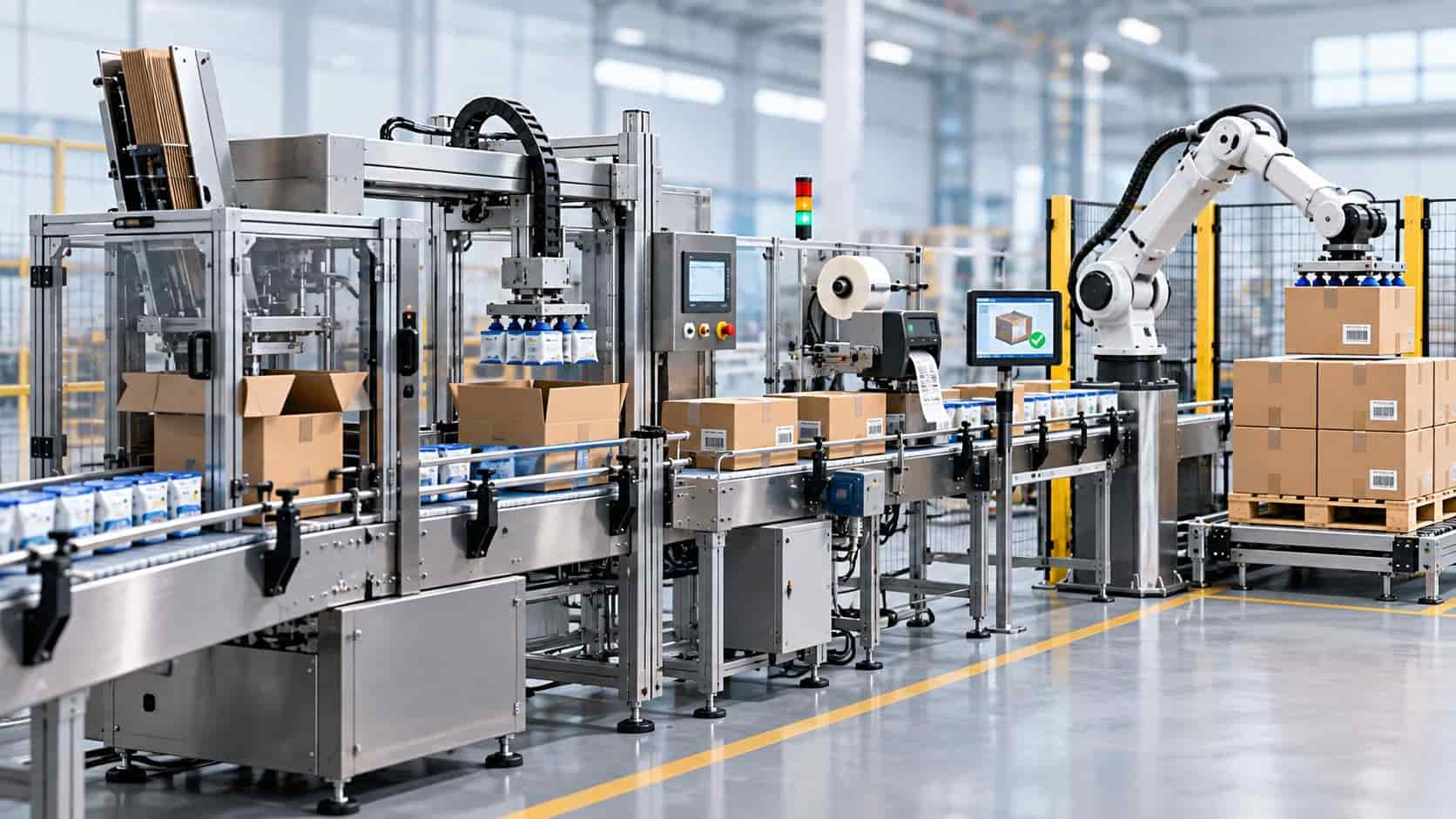
Industrial packaging automation machinery operating on a modern production line

Picture two plants running identical filling and sealing lines, same machines, same output rate, same shift pattern. Six months later, one is hitting every dispatch deadline without breaking a sweat. The other is burning overtime hours every week just to keep up. The difference usually isn’t upstream. It’s what happens after the seal, cartoning, case packing, palletising, and getting product out the door.

That gap is exactly why end-of-line packaging automation is worth a serious look, even for plants that already feel like their “main” line is running well.

What "End-of-Line" Actually Covers

It’s a broader stretch of the process than most people assume. After a product is filled and sealed, it typically still needs to be:

  • Grouped and packed into cartons or cases
  • Coded or labelled with batch, lot, or serialisation data
  • Checkweighed or inspected for completeness
  • Stacked and wrapped onto pallets for dispatch

On many lines, one or more of these steps is still done entirely by hand, not because it’s the best option, but because it’s the step nobody got around to automating yet.

Where Automation Actually Changes the Math

Each stage above has a slightly different payoff once it’s automated, and it helps to know which ones apply to your line:

  • Automatic cartoning machines keep pace with faster upstream filling lines instead of quietly throttling them
  • Automated case packing cuts changeover time noticeably when you’re switching between SKUs or case sizes often
  • Inline checkweighing and vision inspection catch a short-filled or mislabeled case before it leaves the building, not after a customer complaint
  • Automated palletising reduces physical strain on staff and produces more consistent, stable pallet stacks than manual stacking under time pressure
  • Integrated labelling and coding removes manual data-entry errors on batch numbers, a bigger deal than it sounds, especially for pharma and export-regulated products

None of this requires an all-at-once overhaul. Most plants see meaningful results by automating the single stage that’s actually constraining them, rather than replacing the whole end-of-line process in one go.

The Cost Most Plants Forget to Count

Here’s something that rarely comes up in an automation cost-benefit conversation. When plants weigh whether an end-of-line machine is “worth it,” they usually compare its price against current labour expense, the base wages of the people doing the job manually.

What often gets left out: overtime premiums during demand spikes, temporary or agency staff brought in to cover a manual bottleneck, and the cost of rush freight when a shipment slips past its dispatch window because packing couldn’t keep pace. None of these show up as one clean line item; they’re scattered across payroll, staffing invoices, and logistics costs, which makes them easy to underestimate. Add them up properly before comparing your current process to an automation quote, and the payback period is often shorter than it first appears.

What Happens to Your Team When You Automate This Stage

This question comes up in almost every conversation about automating manual packing steps, and it deserves a straight answer. In most cases, automating end-of-line doesn’t mean cutting the team; it means redeploying them. Staff who were manually packing cases or stacking pallets are often better used on quality checks, changeover support, or tasks a machine simply can’t do, while the automated system takes over the repetitive, physically demanding work.

Plants that plan for this upfront, deciding where existing staff will move to before the machine even arrives, tend to see a smoother transition and far less internal resistance than plants that treat automation purely as a headcount reduction. It’s worth having that conversation early, not after the equipment is already on the floor.

The Last Stretch Shouldn't Be the Weak Link

A production line moves at the pace of its slowest step, and end-of-line is where that slowest step hides more often than most plants expect. Fixing it isn’t about chasing the most advanced technology on the market; it’s about making sure the stretch between “sealed” and “shipped” isn’t quietly undoing the efficiency you’ve already built upstream. Not every end-of-line packaging company will tell you when a smaller fix is enough, but that’s exactly the conversation worth having before you invest.

At Pactech Solutions, we help pharma, FMCG, and industrial manufacturers pinpoint where end-of-line inefficiencies cost them – in labour, in missed dispatch windows, and in inconsistent output, and recommend only what genuinely fits, whether that’s a single cartoning machine or a broader automated system.

Reach out to our team for a straightforward look at your end-of-line process and where automation would actually help.

Enquiry Form