Today’s manufacturers rarely produce just one product. Consumer demand, seasonal promotions, private labeling, and product innovation have led to an increasing number of Stock Keeping Units (SKUs). From different package sizes and flavors to varying pouch formats and branding, manufacturers must manage a wide range of products while maintaining high production efficiency.
Traditional packaging lines designed for a single product often struggle to keep up with these changing requirements. Frequent machine adjustments, long changeover times, and production interruptions can significantly reduce productivity.
A flexible packaging line is designed to overcome these challenges. By combining adaptable machinery, automation, and intelligent line integration, manufacturers can efficiently package multiple products on the same production line while maintaining speed, quality, and consistency.
What Is a Flexible Packaging Line?
A flexible packaging line is a production system that can quickly adapt to different products, package sizes, packaging materials, and production volumes with minimal downtime.
Unlike conventional packaging systems that require extensive manual adjustments, flexible packaging lines are designed for rapid product changeovers and efficient operation across multiple SKUs.
This allows manufacturers to respond quickly to changing customer demands without compromising productivity.
Why Multiple SKUs Create Packaging Challenges
As product portfolios expand, packaging operations become more complex. Different products often require unique pouch sizes, filling volumes, sealing parameters, labeling requirements, and carton configurations.
Without a flexible packaging system, manufacturers may experience frequent production stoppages, longer setup times, increased material waste, inconsistent packaging quality, and reduced equipment utilization.
A well-designed flexible packaging line eliminates many of these challenges by allowing smooth transitions between different production runs.
Start with Modular Packaging Equipment
The foundation of a flexible packaging line is modular machinery. Instead of investing in equipment designed for a single application, manufacturers should choose machines that can accommodate multiple packaging formats and product types.
Modern packaging equipment can often be configured to handle various pouch styles, filling systems, and sealing methods using interchangeable components and programmable settings.
This flexibility allows businesses to introduce new products without replacing entire machines.
Choose Machines That Support Fast Changeovers
One of the biggest productivity losses in multi-SKU manufacturing occurs during product changeovers.
Modern packaging machines reduce changeover times through digital recipe management, servo-driven adjustments, touchscreen controls, and tool-less component replacement.
Operators can quickly switch between products by selecting predefined machine settings rather than manually recalibrating the entire system.
Faster changeovers increase available production time and improve overall equipment efficiency.
Invest in Versatile Packaging Machines
Flexible production starts with versatile machinery capable of handling a wide variety of products.
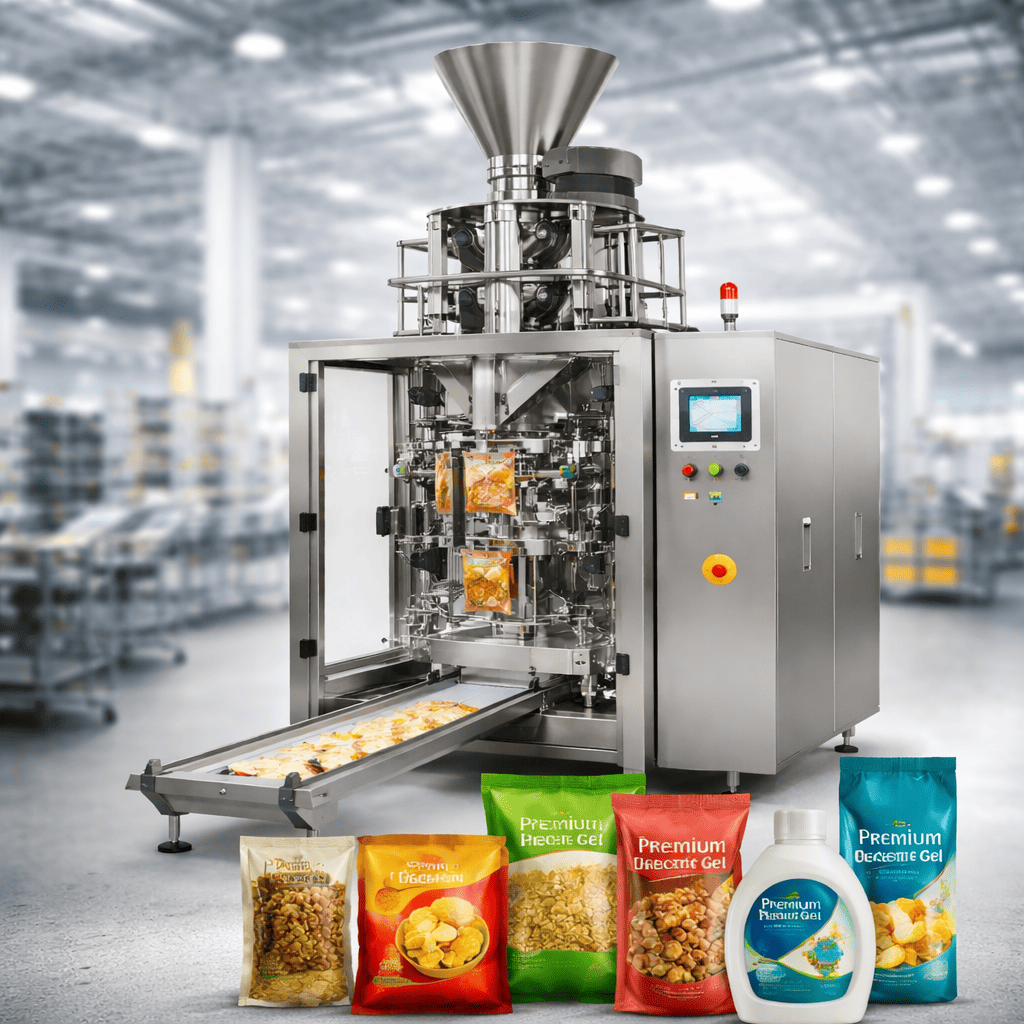
Machines such as Vertical Form Fill Seal (VFFS) systems can package powders, granules, snacks, coffee, seeds, and detergents using different pouch styles.
Horizontal Form Fill Seal (HFFS) machines are suitable for products requiring careful placement, while Flow Wrap Machines, Cartonators, and Pick Fill Seal Machines provide additional flexibility for different packaging applications.
Selecting equipment with multiple configuration options allows manufacturers to serve diverse markets using the same production line.
Integrate the Entire Packaging Line
Flexibility depends on more than individual machines. Every stage of the packaging process should work together as a connected system.
An integrated packaging line typically includes:
- Product feeding systems
- Filling equipment
- Form Fill Seal machines
- Inspection systems
- Cartonators
- Case packers
- Robotic palletizers
- Conveyor systems
When these systems communicate effectively, production flows smoothly even during product changes.
Use Automation to Improve Efficiency
Automation plays a key role in managing multiple SKUs.
Automated controls can adjust filling quantities, sealing temperatures, conveyor speeds, labeling positions, and inspection settings without requiring extensive manual intervention.
This improves consistency while reducing operator errors.
Automation also enables manufacturers to maintain high production speeds even as packaging requirements become more complex.
Implement Digital Recipe Management
Modern packaging lines store production settings for each product in a centralized control system.
When switching between SKUs, operators simply select the appropriate recipe, and the machine automatically adjusts operating parameters.
Recipe management reduces setup time, improves repeatability, and minimizes production errors.
It also simplifies training by reducing the number of manual adjustments operators need to perform.
Build for Future Expansion
Packaging requirements continue to evolve as businesses introduce new products and enter new markets.
A flexible packaging line should be designed with future growth in mind.
Scalable systems allow manufacturers to add new machines, integrate robotics, expand end-of-line automation, or introduce digital monitoring without replacing the existing production line.
This protects the initial investment while supporting long-term business growth.
Improve Visibility with Smart Monitoring
Real-time production data helps manufacturers identify inefficiencies and optimize packaging operations.
Smart monitoring systems provide visibility into:
- Production output
- Machine utilization
- Downtime
- Changeover performance
- Reject rates
- Material consumption
These insights help manufacturers continuously improve productivity while reducing operational costs.
Benefits of a Flexible Packaging Line
A flexible packaging system offers numerous operational advantages. Manufacturers can handle a wider range of products without investing in multiple dedicated production lines, reduce changeover times, improve overall equipment utilization, maintain consistent packaging quality, respond quickly to market demands, and support future business growth with scalable automation.
These benefits allow businesses to remain competitive while delivering greater efficiency across their packaging operations.
Industries That Benefit Most
Flexible packaging lines are valuable across many industries, particularly those with diverse product portfolios.
These include:
- Food and beverage
- Pharmaceuticals
- FMCG
- Chemicals
- Agriculture
- Personal care
- Nutraceuticals
- Industrial manufacturing
As product variations continue to increase, flexible packaging systems provide manufacturers with the agility needed to remain competitive.
Final Thoughts
Managing multiple SKUs no longer requires multiple dedicated packaging lines. With the right combination of flexible machinery, automation, smart controls, and integrated production systems, manufacturers can package a wide variety of products efficiently on a single line.
Investing in a flexible packaging solution not only improves operational efficiency but also prepares businesses for future growth, changing customer demands, and expanding product portfolios. In today’s competitive manufacturing environment, flexibility is no longer an advantage, it has become a necessity.