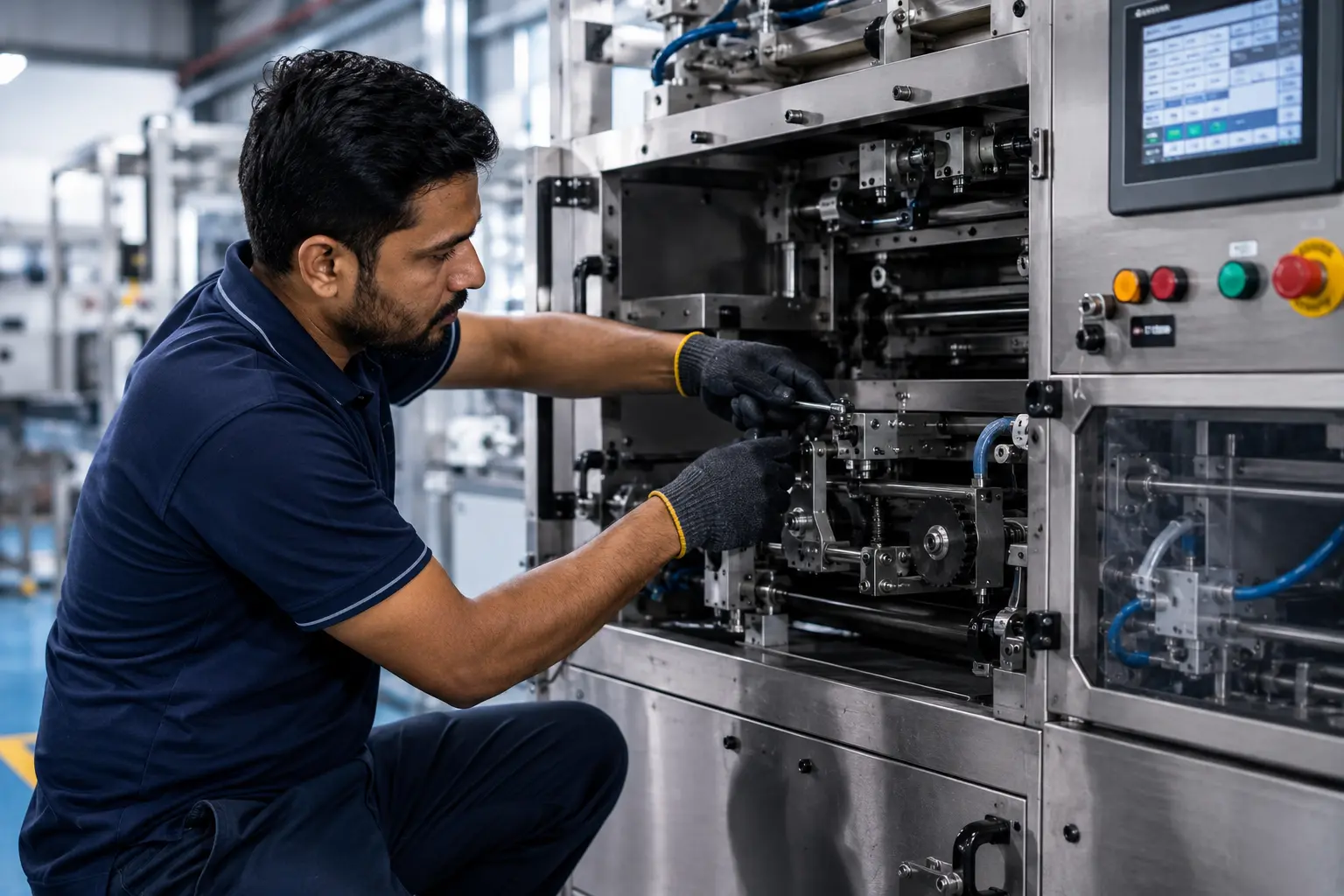
When businesses invest in packaging machinery, the focus is often on technical specifications. Buyers compare machine speeds, automation capabilities, output capacity, accuracy levels, and advanced features in an effort to find the best solution for their production needs.
While these factors are important, they represent only one part of a successful packaging investment.
A packaging machine may perform exceptionally well during demonstrations and factory acceptance tests, but its true value is determined by how reliably it performs over years of daily production. This is where after-sales support becomes a critical factor. In many cases, the quality of service and support provided after installation has a greater impact on operational success than the machine specifications themselves.
Packaging Machinery Is a Long-Term Investment
Unlike many business purchases, packaging machinery is not a short-term asset. Manufacturers expect their equipment to operate efficiently for years while meeting changing production requirements.
During its lifecycle, a machine will face continuous operational demands, including long production runs, product variations, frequent changeovers, and evolving customer expectations. Even the most advanced equipment requires maintenance, technical support, spare parts, and occasional troubleshooting.
This means that purchasing a machine is not simply a transaction. It is the beginning of a long-term relationship between the manufacturer and the equipment supplier.
What Happens After Installation Matters Most
Many machinery suppliers focus heavily on the sales process but provide limited support once the equipment is commissioned. Unfortunately, this is often when businesses discover the real quality of their supplier.
A machine can have impressive technical specifications on paper, but if service requests take days to resolve or spare parts are difficult to obtain, production performance quickly suffers.
Successful manufacturers understand that machine ownership extends far beyond installation day. Reliable support ensures that production continues smoothly long after the machine enters operation.
Downtime Is the Real Cost Driver
Every minute of downtime has a direct impact on profitability. When a packaging machine stops unexpectedly, the consequences can spread throughout the entire production process.
Production schedules become disrupted, delivery commitments may be missed, labor efficiency decreases, and customer satisfaction can be affected. In industries with high-volume production requirements, even a short interruption can create significant operational challenges.
Fast and responsive after-sales support helps minimize these disruptions. A supplier that can quickly diagnose problems, provide technical guidance, and dispatch service personnel when necessary becomes an important contributor to operational continuity.
Faster Problem Resolution
Even minor technical issues can escalate if not addressed quickly.
Strong after-sales support provides access to:
- Experienced service engineers
- Technical troubleshooting assistance
- Remote diagnostics
- Emergency support
When problems occur, manufacturers need solutions, not delays.
A knowledgeable support team can often identify and resolve issues before they impact production significantly.
Spare Parts Availability Can Determine Productivity
One of the most overlooked aspects of machinery ownership is spare parts support.
A machine may be capable of running at high speeds and delivering excellent packaging quality, but if a critical component fails and replacement parts are unavailable, production can stop entirely.
Reliable suppliers maintain spare parts inventories, provide guidance on critical component stocking, and ensure replacement parts can be delivered quickly when needed.
This support helps manufacturers avoid prolonged downtime and maintain consistent production schedules.
Operator Training Improves Machine Performance
Modern packaging machines are becoming increasingly sophisticated. Advanced automation, digital controls, and integrated software systems offer tremendous advantages, but they also require skilled operators.
Comprehensive training is a key component of effective after-sales support.
Well-trained operators understand how to optimize machine performance, identify early warning signs of potential issues, and perform routine maintenance correctly. This improves productivity, reduces operating errors, and extends equipment life.
Without proper training, even the most technologically advanced machinery may never reach its full potential.
Supporting Future Growth
Manufacturing businesses rarely remain static. As demand grows, production volumes increase, new products are introduced, and packaging formats evolve.
A dependable packaging machinery partner supports these changes by helping manufacturers adapt their equipment to new requirements. This may involve machine upgrades, software enhancements, automation integration, or production line optimization.
Suppliers that remain engaged throughout the lifecycle of the equipment help businesses maximize the value of their original investment while preparing for future expansion.
Preventive Maintenance Protects Performance
Preventive maintenance is another area where after-sales support delivers significant value.
Rather than waiting for equipment failures to occur, proactive maintenance programs help identify wear and potential issues before they affect production.
Regular inspections, component replacements, performance checks, and system calibration improve reliability and reduce the likelihood of unexpected breakdowns.
Over time, preventive maintenance contributes to longer equipment life, lower repair costs, and more predictable production performance.
The Best Suppliers Become Strategic Partners
The strongest machinery suppliers do more than provide equipment and technical support. They become long-term partners invested in the success of their customers.
By understanding production goals, operational challenges, and future growth plans, these partners can recommend improvements that enhance efficiency and profitability.
Their role evolves from equipment supplier to trusted advisor, helping businesses continuously improve packaging operations and stay competitive in changing markets.
Looking Beyond Specifications
Machine specifications remain an important part of the purchasing process, but they should never be the only factor influencing a buying decision.
Manufacturers should also evaluate:
- Service response times
- Technical support capabilities
- Spare parts availability
- Operator training programs
- Preventive maintenance services
- Upgrade and expansion support
These factors often have a greater impact on long-term performance than small differences in machine speed or technical features.
Final Thoughts
A packaging machine is only as valuable as the support system behind it. While technical specifications help determine what a machine can do, after-sales support determines how effectively that machine performs throughout its operational life.
Fast service, expert technical assistance, spare parts availability, preventive maintenance, and ongoing partnership all contribute to maximizing production efficiency and protecting business investments.
For manufacturers evaluating packaging machinery, the question should not simply be, “What can this machine do?” but also, “Who will support us when we need help?”
In the long run, the answer to the second question often has the greatest impact on success.