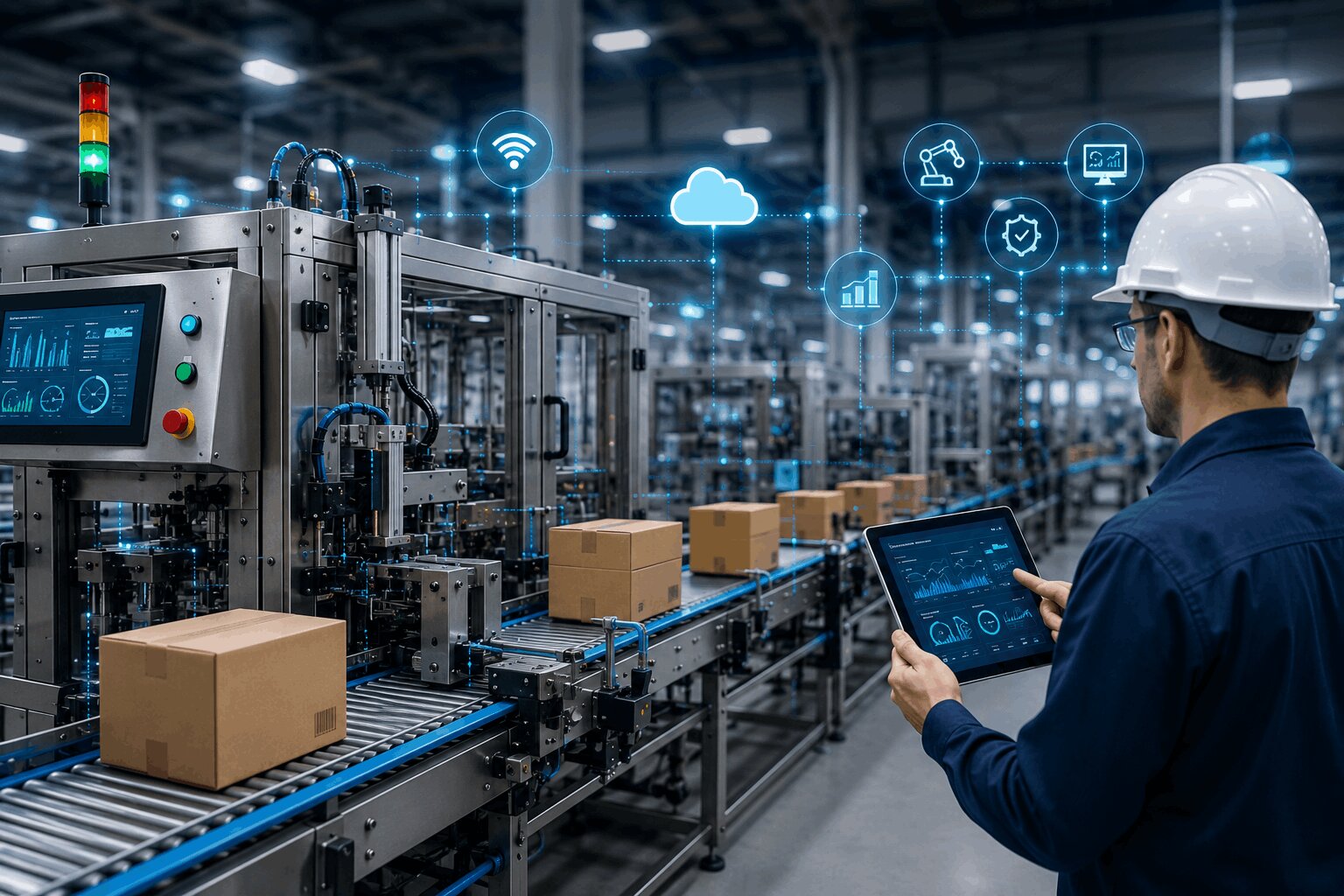
Manufacturing is rapidly moving toward smarter and more connected operations. Packaging lines are no exception. Businesses that still rely heavily on manual tracking, disconnected machines, and paper based processes often struggle with inefficiencies, downtime, and limited visibility into production performance.
Digitizing packaging operations helps manufacturers improve efficiency, reduce errors, and gain real time control over production. It allows packaging systems to become more intelligent, connected, and data driven.
For industries such as FMCG, food, pharmaceuticals, chemicals, and industrial manufacturing, digitization is becoming essential for staying competitive. The good news is that digitization does not need to happen all at once. A step by step approach makes the transition practical and manageable.
What Does Digitizing Packaging Operations Mean
Digitizing packaging operations means using digital technologies to monitor, control, and optimize packaging processes. Instead of relying only on manual supervision, businesses use sensors, software, automation, and connected systems to improve decision making and operational performance.
Digitized packaging lines can:
- Track machine performance in real time
- Monitor production output and downtime
- Automate repetitive tasks
- Reduce human errors
- Improve maintenance planning
- Provide production data for analysis
The goal is to create a more efficient and transparent packaging environment.
Step 1: Evaluate Your Current Packaging Operations
The first step in digitizing packaging operations is understanding your existing setup. Before investing in new technology, manufacturers should carefully evaluate their current processes to identify operational challenges and inefficiencies.
Common issues often include frequent downtime, bottlenecks in the packaging line, excessive material wastage, manual data recording, inconsistent packaging quality, and delays during SKU changeovers.
Conducting a detailed assessment of these areas helps businesses understand where productivity losses occur and where digital solutions can deliver the biggest improvements in efficiency, accuracy, and overall line performance.
Step 2: Start with Machine Connectivity
Many older packaging machines operate independently without sharing operational data, which limits visibility and makes performance tracking difficult. One of the most important first steps toward digitization is connecting machines across the packaging line.
Machine connectivity enables equipment to communicate with monitoring systems and centralized dashboards in real time. Sensors and controllers collect valuable production data such as machine speed, output levels, temperature, pressure, error frequency, and downtime duration.
This connected environment gives manufacturers better visibility across the entire packaging process and helps them accurately understand machine performance, identify inefficiencies, and make faster operational decisions.
Step 3: Implement Real Time Monitoring Systems
Once machines are connected, real time monitoring systems can be introduced. These systems display live production data and performance metrics on digital dashboards.
Operators and managers can instantly view:
- Production rates
- Machine efficiency
- Downtime events
- Rejection rates
- Material consumption
Real time monitoring improves decision making by replacing guesswork with accurate data.
Step 4: Automate Repetitive Processes
Digitization delivers the best results when combined with automation. Repetitive packaging tasks such as product feeding, sealing, labeling, and palletizing can be automated to improve consistency, increase speed, and reduce dependency on manual labor.
Automation also minimizes errors caused by manual handling, helping manufacturers maintain better packaging quality and operational accuracy. Technologies such as automated conveyors, robotic palletizers, automatic filling systems, and smart sealing and inspection systems create a more streamlined production environment.
By automating high repetition tasks, manufacturers can achieve greater operational stability, reduce downtime, and improve overall packaging efficiency.
Step 5: Digitize Quality Control
Manual quality checks are often inconsistent and time consuming. Digital inspection systems improve accuracy and reduce defective packaging.
Vision inspection systems and sensors can automatically check:
- Label placement
- Seal integrity
- Product count
- Barcode accuracy
- Package alignment
Defective products are identified immediately, reducing waste and protecting product quality.
Step 6: Introduce Predictive Maintenance
Traditional maintenance approaches rely on fixed schedules or reactive repairs. Digitized packaging operations use predictive maintenance to monitor machine health continuously.
Sensors track factors such as vibration, motor temperature, and machine load. If abnormal patterns are detected, maintenance teams receive alerts before failures occur.
Predictive maintenance reduces downtime and extends machine lifespan.
Step 7: Integrate Packaging Line Data
As different machines and systems become digitized, integrating all production data into one platform becomes important.
Integrated systems provide a complete view of operations, allowing manufacturers to:
- Track efficiency across the entire line
- Identify bottlenecks quickly
- Improve production planning
- Optimize machine synchronization
Centralized data also helps management make strategic decisions based on actual production performance.
Step 8: Train Teams for Digital Operations
Technology adoption becomes truly effective only when operators and maintenance teams understand how to use digital systems efficiently. Proper training plays a critical role in ensuring smooth implementation and long term success.
Teams should be trained in operating digital interfaces, interpreting production data, managing automated systems, and responding quickly to system alerts and notifications. A skilled and well informed workforce helps manufacturers maximize the value of digitized packaging operations by improving productivity, reducing errors, and ensuring better control over the entire production process.
Benefits of Digitizing Packaging Operations
Improved Efficiency
Connected systems and automation reduce delays, bottlenecks, and manual errors.
Better Production Visibility
Real time data helps managers monitor operations continuously and make faster decisions.
Reduced Downtime
Predictive maintenance and performance monitoring prevent unexpected machine failures.
Higher Packaging Quality
Digital inspection systems improve consistency and reduce defective products.
Scalability
Digitized packaging operations are easier to expand and adapt to new production demands.
Common Challenges During Digitization
Some manufacturers hesitate to digitize due to concerns about cost, complexity, or compatibility with older machines. However, digitization can be implemented gradually.
Starting with small improvements and expanding step by step makes the process more manageable and cost effective.
Working with experienced packaging automation partners also helps ensure smooth integration and long term success.
Future of Digital Packaging Operations
The future of packaging will become increasingly data driven and automated. Artificial intelligence, machine learning, and advanced analytics will further improve efficiency and predictive capabilities.
Smart factories will rely on fully connected packaging systems capable of self monitoring and optimization.
Manufacturers that begin digitizing today will be better prepared for future production demands and industry changes.
Final Thoughts
Digitizing packaging operations is no longer just an option for large manufacturers. It is becoming essential for businesses that want to improve efficiency, reduce downtime, and stay competitive.
By taking a step by step approach, manufacturers can gradually build smarter, more connected packaging lines without overwhelming operations or budgets. The result is a more efficient, reliable, and future ready packaging environment.